
Almeda Fire Carpet Cleaning: What Phoenix & Talent Homes Still Need in 2026
The Almeda fire burned through the Rogue Valley on September 8, 2020 — destroying more than 2,800 homes in Phoenix, Talent, and Ashland and becoming the most destructive wildfire in Oregon history. Six years later, the communities have largely rebuilt. But a specific carpet problem persists in homes throughout the Almeda corridor that most homeowners don’t know they have: embedded smoke residue that standard cleaning doesn’t touch.
This guide explains what Almeda smoke residue actually is, why it keeps coming back after regular cleaning, and what the correct treatment process looks like — so you can make an informed decision about whether your Phoenix or Talent home still needs it.
Key takeaway: PM2.5 smoke particles from the Almeda fire and subsequent fire seasons bind chemically to carpet fiber. They don’t vacuum out, and they don’t extract with cold or warm water cleaning. Effective removal requires alkaline pre-spray plus hot water extraction at proper temperatures.
What Almeda Smoke Actually Did to Carpet
Most people understand that fire smoke makes things smell bad. What’s less understood is the chemistry of what happens when PM2.5 smoke particles — the fine particulate matter that causes air quality alerts — settle into carpet fiber.
PM2.5 particles are small enough to pass through standard HVAC filters and penetrate past the face fiber of carpet all the way into the backing and padding. During an event like the Almeda fire, a home in Phoenix or Talent that wasn’t directly in the fire’s path could still have experienced 12–72 hours of heavy smoke exposure as the fire burned through the corridor.
Once in the carpet backing, smoke particles bond acidically to the fiber. This acidic bond is what creates the persistent smell — when humidity increases (morning, after cooking, after it rains), the acidic residue activates and off-gases. This is why carpets in Almeda-area homes often smell fine in dry summer conditions and noticeably worse in fall and winter.
Why Regular Cleaning Doesn’t Fix It
Standard carpet cleaning — whether DIY rental machines or most professional portable-unit services — operates at relatively low water temperatures and applies detergent followed by extraction. This process works well for surface soil, recent spills, and general maintenance cleaning.
It doesn’t work for Almeda smoke residue for two reasons:
- Temperature: The acidic smoke bond requires hot water extraction at temperatures that portable units can’t consistently maintain. Truck-mounted systems reach and sustain the temperatures needed to break these bonds.
- Chemistry: Acidic smoke compounds require an alkaline pre-treatment to neutralize the bond before extraction. Without this step, the extraction just moves the particles around — they don’t release from the fiber.
This is why many Phoenix and Talent homeowners have had their carpets cleaned since 2020 and still notice the smoke smell returning in wet weather. The cleaning addressed the surface but not the chemically bonded residue in the backing.
The test: If your carpets smell like smoke specifically when humidity is high — morning, after rain, in winter — that’s activated acidic smoke residue off-gassing. Surface cleaning won’t fix it. Enzyme or alkaline pre-treatment followed by hot water extraction is required.
The Correct Smoke Residue Process
The process we use for Almeda-affected carpets differs from standard cleaning at two specific steps:
Step 1: Alkaline Pre-Spray
An alkaline cleaning solution is applied to all smoke-affected areas and allowed to dwell for 5–8 minutes. Alkaline chemistry neutralizes the acidic smoke compounds at the molecular level — this is the step that breaks the bond between the smoke particle and the carpet fiber. Without adequate dwell time, the chemistry doesn’t work.
Step 2: High-Temperature Hot Water Extraction
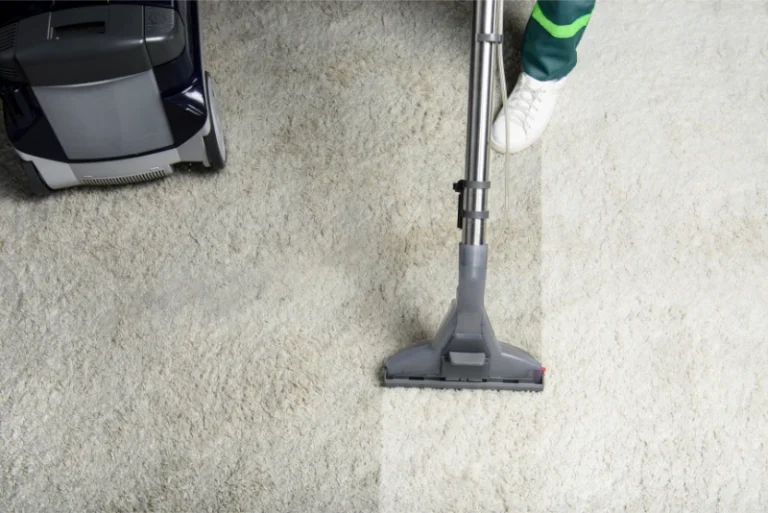
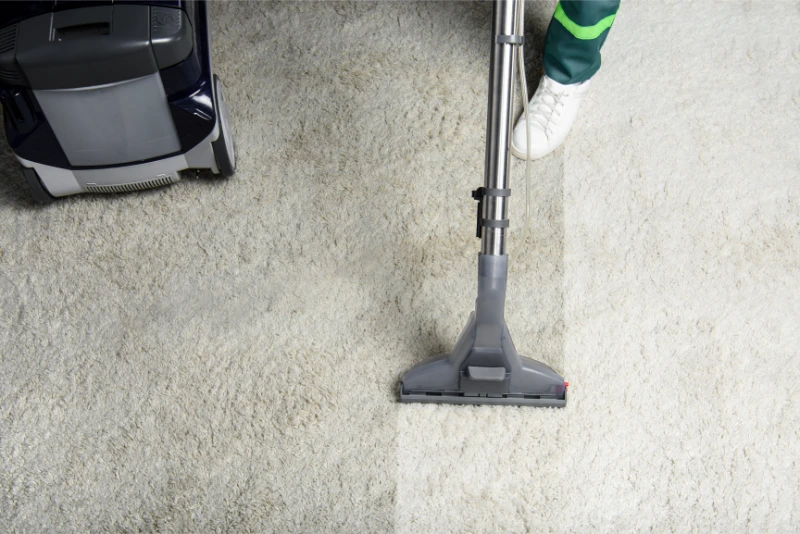
Truck-mounted hot water extraction at proper temperatures pulls the neutralized particles out of the fiber and backing. The combination of temperature, vacuum pressure, and pre-neutralized particles is what makes this effective where standard cleaning fails.
For heavily affected areas — carpets near windows that were open during the fire, homes with forced-air HVAC that was running during the event, or homes with dense pile carpet — we may run a second extraction pass after the first has dried partially to capture residue that migrates upward as moisture evaporates.
How to Know If Your Home Still Needs It
Not every Phoenix or Talent home that survived the Almeda fire corridor still has significant smoke residue. Here are the factors that determine how much residue your carpet likely holds:
- Was your HVAC running during the event? Forced-air systems in operation during smoke events pull particles through ducts and distribute them throughout the home, including into carpet throughout every room.
- Were windows open? Any opening during the fire allowed smoke concentration to build inside. Homes that were sealed fared significantly better.
- What carpet type do you have? Dense pile carpet (like plush or frieze) holds more particulate per square foot than low-pile commercial-style carpet. Loop pile (Berber) is somewhat in between.
- Has the carpet been cleaned since 2020? Even ineffective cleaning removes some surface particles. If the carpet hasn’t been cleaned at all since 2020, it’s the most likely to have significant residue.
- Do you notice the smell seasonally? If the smoke smell appears specifically in wet or cold conditions and fades in dry summer weather, that’s the acidic residue activating with humidity changes.
What About Annual Fire Season Since 2020?
Phoenix and Talent aren’t just dealing with 2020 Almeda residue. The Rogue Valley has had significant fire seasons in 2021, 2022, 2023, 2024, and 2025 — each adding a layer of PM2.5 residue to carpets in homes throughout the corridor. Even homes rebuilt after the Almeda fire with brand-new carpet have accumulated five years of annual fire season exposure since then.
This is why post-season carpet cleaning — ideally in October or November after the main fire season ends — is genuinely useful for any home in the Phoenix/Talent area, not just the ones directly affected by the 2020 event. A single annual deep extraction removes the accumulated season residue before winter humidity activates it.
Smoke Residue in Your Phoenix or Talent Home?
Call us for an honest phone assessment — we’ll tell you whether what you’re describing sounds like Almeda residue or something else, before you book anything.
Call (458) 346-2026Frequently Asked Questions
Can you guarantee complete smoke smell removal?
We can guarantee an honest assessment before we clean and a significant reduction in smoke odor if you have chemically bonded residue in the fiber. Complete elimination depends on how deep the residue has penetrated — if it’s in the padding and subfloor as well as the carpet, full odor elimination may require padding replacement in addition to carpet cleaning. We tell you this before we start.
How much does smoke residue cleaning cost?
Same as standard cleaning, plus the alkaline pre-spray which is a modest add-on per room. See our full pricing guide — we quote the full amount before we arrive, not after.
Is this covered by any insurance?
Some homeowners’ insurance policies cover smoke damage remediation for carpets affected by the Almeda fire specifically. This is worth checking with your insurer — the documentation we provide (timestamped receipt with service description) satisfies most insurance remediation requirements.
We have new carpet installed post-Almeda — do we need this?
If the carpet was installed after 2020 and the home was sealed during subsequent fire seasons, probably not for Almeda residue specifically. However, five additional fire seasons of annual smoke exposure may have deposited enough PM2.5 residue in new carpet to warrant a post-season extraction. Read our full wildfire smoke guide for more on annual maintenance cleaning.